Monthly Archives: May 2014

Demo Flight

Last saturday morning I called Steve and he gave me the good news. The propeller on C172 (N25ES) has been replaced and the test flight was to be later that afternoon. So I called him again on tuesday and when he confirmed the test flight was successful, we scheduled the demo flight for today. Srinath and I met Steve inside the Livermore airport and we drove to the hangar.

Steve walked me through the preflight inspection after which we towed the plane out of the hangar. I had my GoPro camera ready to shoot a video of the flight. A few days ago I purchased the GoPro Aircraft Cable by Nflightcam for $49.99 from Amazon.com in order to directly record audio on the flight intercom. I couldn’t figure out a way to clamp the camera within the cockpit so I planned to later get a suction mount. Today I will have to hand hold the camera with the audio input plugged in.

GoPro Aircraft Cable by Nflightcam

Srinath took the controls, he walked through the checklist before starting the engine. Once the checklist was completed, we looked out and Steve noticed that I had left the oil tank door open on top of the cowling. Running a “final walk around” before starting the engine could have caught this issue. We closed the oil tank door, Srinath communicated with ATC to get clearance for taxi and after an uneventful takeoff, we turned crosswind and then downwind.

As we neared Byron, I noticed a streak of smoke above the runway and thought that must be a jet exhaust. Steve quickly spotted it and called to our attention that it was an aerobatics pilot below us. We quickly changed our heading south east towards Tracy. Srinath maintained 3000’ altitude and Steve asked him to stall the plane and recover. The first time he showed Srinath how to reach a stall by asking him to pull back the throttle, then pitch up. The stall horns went off and I was getting nervous in the back seat since I hadn’t expected to be stalling the plane on our very first flight. Soon stall was reached, the nose pitched down as I had read in the books and watched on videos. Srinath eased back pressure, gave it full throttle and I felt like I was on a roller coaster. First the acceleration as the nose pitched down and the aircraft descended, then a sudden surge up as the full throttle generated lift. After recovering lost altitude, Steve asked Srinath to perform another full stall and recovery.

Steve intended to dispel myths about flying and demonstrating stalls was one of them. He next simulated engine out. At 3000’ altitude, he pulled back the throttle to idle and trimmed the aircraft to a gliding speed of 65 KIAS. While the aircraft glided downwards, he talked us through the process of identifying a suitable landing area. Better to land on a brown field than a green field. Better to land along the furrows than across. Be sure to look out in all directions, including on the right side which pilots typically overlook.

It was time to land the plane at Tracy, bring it to a complete stop and turn off the engine. I traded places with Srinath, started the engine, taxied for takeoff. It was my turn to do a couple of stalls. On my first one I was a little slow in recovering from the stall so the nose dropped quite a bit, accelerated downwards before I gave it full throttle to climb back up. The second recovery was quicker. Now it was getting fairly late in the evening and I was flying into a stiff headwind. The sun was pretty close to setting and I was thinking about landing the plane before the “59 minutes after sunset’ regulation. Our ground speed was noticeably slower and as I approached the Livermore hills the ride got quite bumpy. The aircraft was trimmed so I let it fly by itself for the most part through the turbulence. I learned to land “with my feet” using the rudder to stay lined up with the runway instead of using the ailerons as the aircraft descended. Steve took over when we were about a hundred feet above ground. I taxied the plane to refuel, and then back to the hangar. Today’s lessons were Preflight, Climbs, Turns, Stall, Engine out.
Third time is a charm

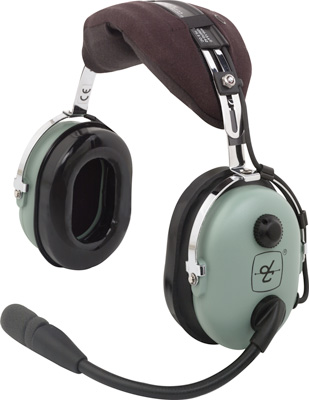
We setup time with Steve to go flying on April 29, 2014 at 11am. He had told us that the club’s Cessna 172 was down waiting for a new propeller which had been ordered. So we were going to fly the 152 and since it was a 2-seater, he would take Srinath and I flying one after the other. Armed with knowledge about weather (from Don’s ground school classes) and the ability to interpret a METAR, I woke up that morning to look up KLVK’s weather report. The conditions at 8am called for a 2000′ ceiling and light winds. Being a small airport, there was no TAF so I looked up Oakland’s forecast. By 11am the ceiling was going up to 2500′ and still light winds. We figured we could at least fly a pattern around the airport (since one had to be 500′ below the clouds and 1000′ above congested areas for VFR). That would leave us with a roughly 1000′ band in which to fly patterns. We arrived at the airport and the skies seemed to have scattered clouds. However Steve pointed to the western sky where dark clouds were forming and apparently pushing towards us. Srinath was disappointed when he said we couldn’t fly that day. So we chatted for about an hour and a half, getting to know each other and discussing our expectations. He gave us a list of items to buy and suggested that we get headsets before anything else. That night after research, I ordered a David Clark H10-13 S stereo headset from amazon.com since I was going flying with Don for the demo flight on May 3rd. Steve suggested it will be at least a week before the propeller arrived, after which it would be a few days to install then test fly to confirm airworthiness. So I figured I’d check out the headset before deciding what to buy for Srinath.

640
DC H10-13 S

Early morning on May 3, I checked the METAR for Reid-Hillview airport (KRHV) and it wasn’t good. OVC012. Nearby San Jose International Airport had a TAF which mentioned that the ceiling would rise to 2000′ by 9am. I sent Don a text and asked if we were still ON. He asked me to come over and then we could decide. Midway to the airport, Don texted me back that he was already at the airport and he didn’t anticipate the clouds would burn off until noon. So we canceled the flight, rescheduled for the 8th and I returned home. The headset arrived a couple of days later.

The weather on the 8th was pretty good and my flight was at 12:30pm out of KRHV. Unfortunately the previous day I was alerted to a NOTAM TFR for the area since President Obama was flying into town for a fundraising event. Fortunately the TFR only went into effect starting 3pm that afternoon. Third time was a charm. Don was waiting for me and he had already completed the walk around checklist. We got into the cockpit, ran through the preflight checklist and very quickly took to the air. Before that, Don handed me his noise-canceling David Clark DC PRO-X to try out. It was slightly quieter than my headset and much smaller in profile. Once we were airborne and climbed to 1000′, Don handed me the controls. We headed for the hills and the practice area above Caleveras Reservoir. It was a little bumpy since it was drizzling towards the south over Anderson lake. I made some turns, then we idled the engine to demonstrate glide slope, stability demonstration, trim, climbs and descents. Don took over the controls as we flew back into a pattern landing for a total 0.8 hour flight. I ordered the DC PRO-X for Srinath.

43100G-01
DC PRO-X