Category Archives: Aviation

Lesson 1

It was a hot day. As we left home around 5:30pm for our first lesson on June 9, 2014 at 6pm, the temperature reading on the car dashboard indicated exactly 100 degrees. We had spent the previous weekend at a scouting camporee at Rancho Los Mochos and the temperatures were scorching hot and dry between 95 and 103 degrees. Comparatively today was cooler. When I called Steve in the morning to schedule this lesson at 5:30pm, he suggested we meet at 6pm instead because it was to be a hot day. He wasn’t sure if we’d be able to make it in the cockpit long enough in the heat for both Srinath and my lesson today. As we were driving, we checked the METAR and remarked that the hot day with low pressure would lower engine performance due to higher density altitude.

This was the first time we used our own access to enter the airport grounds and I was going to try and get into the hangar before Steve showed up so that I could attach the GoPro camera on the ceiling and position at the proper angle. But Steve beat us to the hangar. The ceiling turned out to be not so smooth and I couldn’t attach the GoPro (yet again). Srinath would have to handhold the camera.

I asked Srinath to run the preflight inspection this time because I had done it the last time. The oil dipstick reading wasn’t very clear. I thought the reading was between 3 and 4 quarts whereas Srinath and Steve both thought it was between 4 and 5 quarts. Srinath let me fly first because he had taken off from Livermore on our last flight. By 6:45pm we were strapped in and ready to start the engines. It was sweltering hot in the cockpit and Steve reminded us that pretty soon we would turn on the air conditioning (aka propellers). I completed the other checklists before starting the engine. Steve let me talk to ATC for clearance – Livermore Ground, Cessna 2 5 Echo Sierra at Northeast hangar, request taxi for takeoff with Lima. We were finally lined up and as I gave it full throttle I got the first of many reminders to give it right rudder. The plane snaked on the runway and we took off. Due to the high density altitude, the plane needed 1300′ to reach rotation speed instead of the customary 700′. After a shallow turn crosswind and a shallow turn downwind, we were headed east towards Byron. Steve remarked that it was still 95 degrees outside.

ATC told us that there was an aircraft at 2400’ at 11 o’clock to us. We scanned the skies and could see it. We were climbing and were roughly at 2000’. A few minutes later ATC told us there was an aircraft at 12 o’clock to us at 1800’ which I was able to see executing a descending bank. Again a few minutes later ATC told us there was an aircraft at 6 o’clock to us which I’m not sure how we would ever be able to spot. As we were heading to the practice area, Steve noticed that I was making very shallow turns. To allay my fears me showed what a steeper turn looked like. The combination of the steep bank combined with a loss of altitude got me excited (a little dizzy). After leveling out, I was back at the controls and climbing to 3000’. Steve pulled back the throttle, dropped flaps and trimmed the aircraft to just above stall speed. The stall horns were continuously sounding (even though the airspeed indicator was only at the bottom of the green not the white). I flew the aircraft maintaining airspeed by controlling pitch and executed a 180 turn keeping an eye on the turn and bank indicator to not exceed the “notches” while banking.

This is when Steve noticed that the oil temperature was rising quickly. We continued the slow flight and soon the oil temperature was at max. We increased throttle, pulled back the flaps slowly and dropped the nose to increase airspeed thus cooling the engine. After trimming for a roughly 100 KIAS, we cruised around while the plane was slowly losing altitude. During this time Steve reminded us about how to plan for emergency landings. The oil temperature needle was visibly but slowly retreating into the green until we were down to just under 1000’ now. Executed a slow climb and flew straight and level parallel to a canal, using a distant point as reference on the windshield to keep it straight, all the while keeping an eye on the oil temperature to ensure it wasn’t getting dangerously high.

Today’s lesson was Medium Turns, Straight and Level, Slow Flight and I logged 1.2 hours. Cooling an overheating engine by increasing airspeed was a nice bonus. Perhaps I should have taken a second reading on the oil during preflight and used a tissue to wipe the dipstick clean before taking the reading to improve accuracy. Perhaps I should have suggested that we add more oil given it was going to be a hot day (and more oil will absorb more heat). An over heated engine runs the risk of either failing or catching fire, neither of which would have been welcome occurences on my first official lesson.

Still learning to give right rudder pressure but I started getting a visual feel for when the plane starts to yaw to the left due to P-factor. Still learning to keep one hand on the throttle at all times as the other hand gently holds the yoke. Back at the hangar around 8:15pm we debriefed on the lesson before calling it a night. We left the oil door open on the top of the cowling  and by now the outside temperatures had cooled down considerably.

Demo Flight

Last saturday morning I called Steve and he gave me the good news. The propeller on C172 (N25ES) has been replaced and the test flight was to be later that afternoon. So I called him again on tuesday and when he confirmed the test flight was successful, we scheduled the demo flight for today. Srinath and I met Steve inside the Livermore airport and we drove to the hangar.

Steve walked me through the preflight inspection after which we towed the plane out of the hangar. I had my GoPro camera ready to shoot a video of the flight. A few days ago I purchased the GoPro Aircraft Cable by Nflightcam for $49.99 from Amazon.com in order to directly record audio on the flight intercom. I couldn’t figure out a way to clamp the camera within the cockpit so I planned to later get a suction mount. Today I will have to hand hold the camera with the audio input plugged in.

GoPro Aircraft Cable by Nflightcam

Srinath took the controls, he walked through the checklist before starting the engine. Once the checklist was completed, we looked out and Steve noticed that I had left the oil tank door open on top of the cowling. Running a “final walk around” before starting the engine could have caught this issue. We closed the oil tank door, Srinath communicated with ATC to get clearance for taxi and after an uneventful takeoff, we turned crosswind and then downwind.

As we neared Byron, I noticed a streak of smoke above the runway and thought that must be a jet exhaust. Steve quickly spotted it and called to our attention that it was an aerobatics pilot below us. We quickly changed our heading south east towards Tracy. Srinath maintained 3000’ altitude and Steve asked him to stall the plane and recover. The first time he showed Srinath how to reach a stall by asking him to pull back the throttle, then pitch up. The stall horns went off and I was getting nervous in the back seat since I hadn’t expected to be stalling the plane on our very first flight. Soon stall was reached, the nose pitched down as I had read in the books and watched on videos. Srinath eased back pressure, gave it full throttle and I felt like I was on a roller coaster. First the acceleration as the nose pitched down and the aircraft descended, then a sudden surge up as the full throttle generated lift. After recovering lost altitude, Steve asked Srinath to perform another full stall and recovery.

Steve intended to dispel myths about flying and demonstrating stalls was one of them. He next simulated engine out. At 3000’ altitude, he pulled back the throttle to idle and trimmed the aircraft to a gliding speed of 65 KIAS. While the aircraft glided downwards, he talked us through the process of identifying a suitable landing area. Better to land on a brown field than a green field. Better to land along the furrows than across. Be sure to look out in all directions, including on the right side which pilots typically overlook.

It was time to land the plane at Tracy, bring it to a complete stop and turn off the engine. I traded places with Srinath, started the engine, taxied for takeoff. It was my turn to do a couple of stalls. On my first one I was a little slow in recovering from the stall so the nose dropped quite a bit, accelerated downwards before I gave it full throttle to climb back up. The second recovery was quicker. Now it was getting fairly late in the evening and I was flying into a stiff headwind. The sun was pretty close to setting and I was thinking about landing the plane before the “59 minutes after sunset’ regulation. Our ground speed was noticeably slower and as I approached the Livermore hills the ride got quite bumpy. The aircraft was trimmed so I let it fly by itself for the most part through the turbulence. I learned to land “with my feet” using the rudder to stay lined up with the runway instead of using the ailerons as the aircraft descended. Steve took over when we were about a hundred feet above ground. I taxied the plane to refuel, and then back to the hangar. Today’s lessons were Preflight, Climbs, Turns, Stall, Engine out.

Third time is a charm

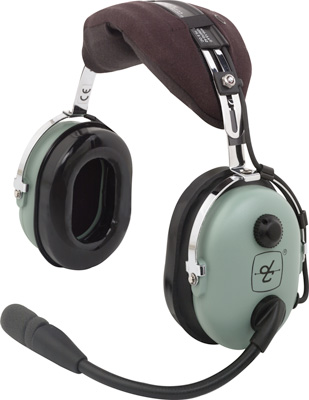
We setup time with Steve to go flying on April 29, 2014 at 11am. He had told us that the club’s Cessna 172 was down waiting for a new propeller which had been ordered. So we were going to fly the 152 and since it was a 2-seater, he would take Srinath and I flying one after the other. Armed with knowledge about weather (from Don’s ground school classes) and the ability to interpret a METAR, I woke up that morning to look up KLVK’s weather report. The conditions at 8am called for a 2000′ ceiling and light winds. Being a small airport, there was no TAF so I looked up Oakland’s forecast. By 11am the ceiling was going up to 2500′ and still light winds. We figured we could at least fly a pattern around the airport (since one had to be 500′ below the clouds and 1000′ above congested areas for VFR). That would leave us with a roughly 1000′ band in which to fly patterns. We arrived at the airport and the skies seemed to have scattered clouds. However Steve pointed to the western sky where dark clouds were forming and apparently pushing towards us. Srinath was disappointed when he said we couldn’t fly that day. So we chatted for about an hour and a half, getting to know each other and discussing our expectations. He gave us a list of items to buy and suggested that we get headsets before anything else. That night after research, I ordered a David Clark H10-13 S stereo headset from amazon.com since I was going flying with Don for the demo flight on May 3rd. Steve suggested it will be at least a week before the propeller arrived, after which it would be a few days to install then test fly to confirm airworthiness. So I figured I’d check out the headset before deciding what to buy for Srinath.

640
DC H10-13 S

Early morning on May 3, I checked the METAR for Reid-Hillview airport (KRHV) and it wasn’t good. OVC012. Nearby San Jose International Airport had a TAF which mentioned that the ceiling would rise to 2000′ by 9am. I sent Don a text and asked if we were still ON. He asked me to come over and then we could decide. Midway to the airport, Don texted me back that he was already at the airport and he didn’t anticipate the clouds would burn off until noon. So we canceled the flight, rescheduled for the 8th and I returned home. The headset arrived a couple of days later.

The weather on the 8th was pretty good and my flight was at 12:30pm out of KRHV. Unfortunately the previous day I was alerted to a NOTAM TFR for the area since President Obama was flying into town for a fundraising event. Fortunately the TFR only went into effect starting 3pm that afternoon. Third time was a charm. Don was waiting for me and he had already completed the walk around checklist. We got into the cockpit, ran through the preflight checklist and very quickly took to the air. Before that, Don handed me his noise-canceling David Clark DC PRO-X to try out. It was slightly quieter than my headset and much smaller in profile. Once we were airborne and climbed to 1000′, Don handed me the controls. We headed for the hills and the practice area above Caleveras Reservoir. It was a little bumpy since it was drizzling towards the south over Anderson lake. I made some turns, then we idled the engine to demonstrate glide slope, stability demonstration, trim, climbs and descents. Don took over the controls as we flew back into a pattern landing for a total 0.8 hour flight. I ordered the DC PRO-X for Srinath.

43100G-01
DC PRO-X

Finding an instructor

In the summer of 2013 we began looking for an introductory flight. A search on YipIt and Groupon revealed a few schools in our area that offered a 1-hour bay aerial tour for close to $200 for 2 people. After dillydallying for a few days I gave up. Srinath didn’t. During the christmas break, I took the next step of calling up a couple of places and finding out more about the introductory flights they offered. Ahart aviation out of Livermore (KLVK) was the closest and I scheduled a bay area tour for January 18 to leave at noon.

The day arrived. We had no clue what to expect when we arrived at Ahart’s lobby. We checked in and were asked to wait for the pilot to arrive. There was a bookshelf in front of the couch so we asked the receptionist to give us a book to flip through. She handed us the FAR AIM as well as the Pilot’s Handbook of Aeronautical Knowledge (PHOAK). The FAR AIM looked daunting but Srinath seemed familiar with it and was ready to peruse. I randomly flipped through the PHOAK and remember skimming through stalls and weather patterns.

Our pilot was James and he drove us to a Cessna 172 that was tied down. After walking us around the plane and through a preflight checklist, we soon took to the air with Srinath on the left seat and myself on the backseat with a Canon 6D ready to shoot videos and images. This was supposed to be an opportunity to evaluate James as a potential instructor but after the flight I had no idea what to ask him. The only piece of information I recall from our conversation was him mentioning an interest in working for an airline and that he was building up hours.

We have quite a few pilots at my workplace and an interest mailing group. Upon seeing a note from Bill that indicated he was a CFI out of Livermore, I reached for an opportunity to pick his brains. A day later we were chatting about advice on choosing an instructor. He suggested that I look for somebody who I didn’t feel would leave before my training was over. He also strongly suggested undergoing unusual attitude training with an aerobatics instructor. His work involved quite a bit of travel so he wasn’t ready to sign up a new student. A few days later, I met with Ron who was another CFI and a colleague. His two pieces of advise were to train on the same type of aircraft which I would most likely fly after receiving a license. And to find an instructor who would be open to let Srinath and I train together. One of us observing from the backseat while the other was flying will be a very valuable learning tool, he said. Unfortunately, he flew out of Palo Alto which was too far for us, otherwise I would have seriously considered signing up with him. At a pilot’s lunch a few days later, another colleague strongly suggested going through a ground school.

Right around this time I called up Tradewinds Aviation in San Jose to find out about their ground school. The person who answered at the front desk mentioned they had a Groupon offer for a 14-week ground school program plus a 1-hour demo flight for $189. That was a sweet deal and I really enjoyed Don’s class. Tradewinds was too far away from where I lived and more importantly, their hourly rates were quite steep otherwise I would have signed up with Don as my instructor in a heartbeat.

Bill had suggested that I check out the Flying Particles club at Livermore. The club meets once a month and an hour prior to the meeting the membership chair takes prospective members on a tour of their hangar. Srinath and I signed up for their February tour when we got to see all their aircraft up close. It was at the meeting later that night that we met Steve who was one of their CFIs as well as the Safety Pilot for the club. He was quite vocal, funny and introduced his student who had just received his private pilot’s license. We spoke with him after the meeting and decided to do a demo flight with the intention of seriously evaluating him as our instructor. The club was largely comprised of members who had retired from the Lawrence Livermore Lab and clearly didn’t have any ambitions of going on to work for an airline.

Prelude

It all started with a trip to the Hillier aviation museum in San Carlos, CA in early December 2011. After touring the exhibits inside and outside, we went upstairs where a few computer stations were setup with Flight Simulator. We all had a chance to try our hand at flying and landing a plane. My elder son Srinath was hooked by this experience and asked Santa to get him Microsoft Flight Simulator X and a Thrustmaster T-Flight Hotas X Flight Stick for Christmas. He has been flying the simulator ever since, starting with gliders tracking guideposts in the sky, then slowly graduating to larger aircraft and now working his way up through Virtual ATC.

My interest in aviation started when I was growing up in India. We were located close enough to and on the approach route for Meenambakkam airport (MAA) that we could tell the rough time without looking at the clock simply based on the roar of jet engines as the occasional scheduled flights flew overhead. From the terrace we could see planes take off and land at the airport in the distance. It remained an interesting pastime. A number of years later when living near Denver, I used to frequent a local airport to watch GA flights and shoot pictures. What was an interesting pastime graduated to an interest but it was trumped by the other priorities in my life at that time. When Srinath became interested in flying is when I began looking more deeply into flight training options.

After months of superficial research, we finally called Ahart Aviation in Livermore, CA and scheduled an intro flight on January 18, 2014.  The weather was perfect – SKC, P6SM, 00000KT. We were paired up with James as our pilot and I let Srinath fly the left seat. My plan was to shoot images and video to remember this first flight. After going through the pre-flight checklist, James obliged our request to fly to the Golden Gate bridge and execute a touch-and-go at Oakland en route. The Cessna 172 felt very compact and my nervous jitters vanished upon takeoff.

Here is the video of our first flight: